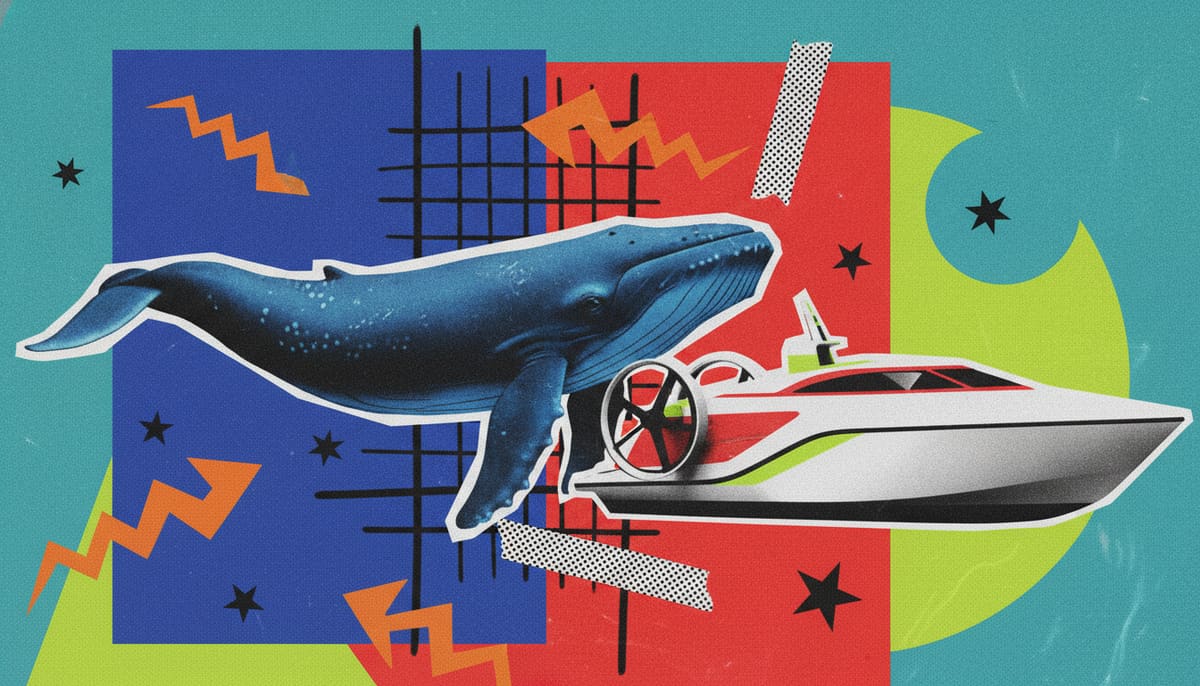
Turning Down the Underwater Volume
If you have ever tried talking to a friend at a loud amusement park, you know how hard it is to make yourself heard. Now imagine living underwater, where sound travels more than four times faster than in air, and noisy cargo ships are buzzing past all day long. For marine animals like whales and dolphins, underwater noise is not just annoying—it is disorienting. These creatures rely on clicks and songs to navigate, hunt, and stay in touch across hundreds of miles.
Most of that underwater roar comes from an effect called cavitation. When standard boat propellers spin rapidly through water, they create areas of extreme low pressure. This causes tiny vapor bubbles to form and instantly collapse with explosive pops. Multiplied across thousands of spins, cavitation sounds like a deafening underwater jackhammer.
A Two-Century-Old Idea Reimagined
An innovative designer has introduced a game-changing solution inspired by concepts dating back over two hundred years: the toroidal propeller. Instead of flat, straight blades that slice the water, this design loops back into continuous curved rings.
- No blade tips: By eliminating sharp outer edges, the propeller prevents violent vortexes from ripping through the water.
- Whisper-quiet cruising: The looped shape drastically reduces bubble formation, making vessels significantly quieter.
- Better efficiency: Boats waste less energy churning up bubbles, which can also help save fuel.
Quieter oceans mean whales can finally hear each other call out across the deep blue sea again. If you were designing a vessel to explore the ocean, what kind of nature-friendly features would you build into it?
Source: Popular Science