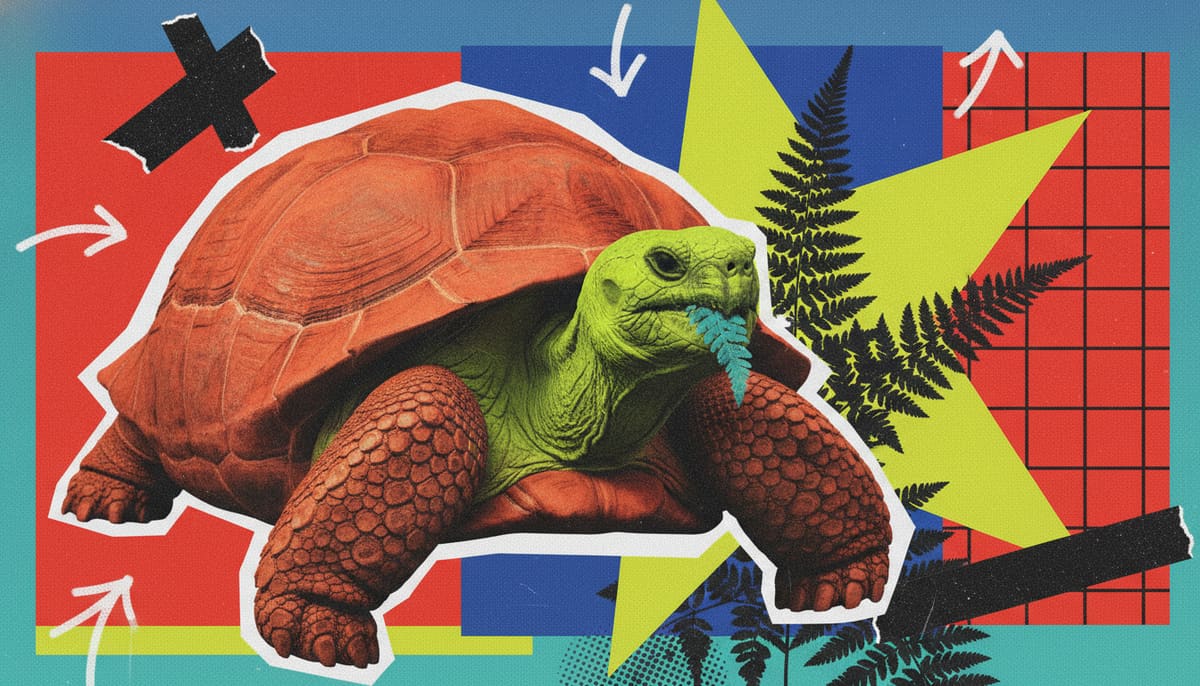
A Reptilian Landslide Victory
Imagine walking onto a tropical island where massive, gentle reptiles rule the landscape. In the Seychelles, an island nation located off the east coast of Africa, that is not a fantasy story—it is reality. A recent scientific census found that roughly 183,000 Aldabra giant tortoises are thriving on the remote Aldabra Atoll. That is almost double the human population of the entire country!
From the Brink to a Record Boom
This huge population is an incredible conservation turnaround. Centuries ago, passing sailors hunted giant tortoises across the Indian Ocean for food, driving several related species completely extinct. By the late 1800s, Aldabra's tortoises had dwindled down to a precarious population of just around 1,000 individuals.
So how did they stage such a legendary comeback? A few key protections made all the difference:
- Extreme isolation: The Aldabra Atoll is an atoll (a ring-shaped coral reef encircling a lagoon) with almost no permanent human residents.
- Strict protected status: Designated as a UNESCO World Heritage site, the habitat has remained undisturbed by modern development.
- Natural grazing power: The tortoises act like lawnmowers, eating native plants and spreading seeds across the islands.
Living Dinosaurs of the Indian Ocean
Aldabra giant tortoises can live for well over 100 years and weigh up to 550 pounds. Because they have virtually no natural predators on the atoll, they wander freely through coastal scrub and mangrove forests, cooling off in muddy pools under the blazing sun. Their booming numbers prove that when we leave an ecosystem alone to heal, nature can stage an astonishing recovery.
If you could visit an island governed entirely by giant tortoises, what would you want to observe first?
Source: Popular Science