The Fireless Cooking Trick
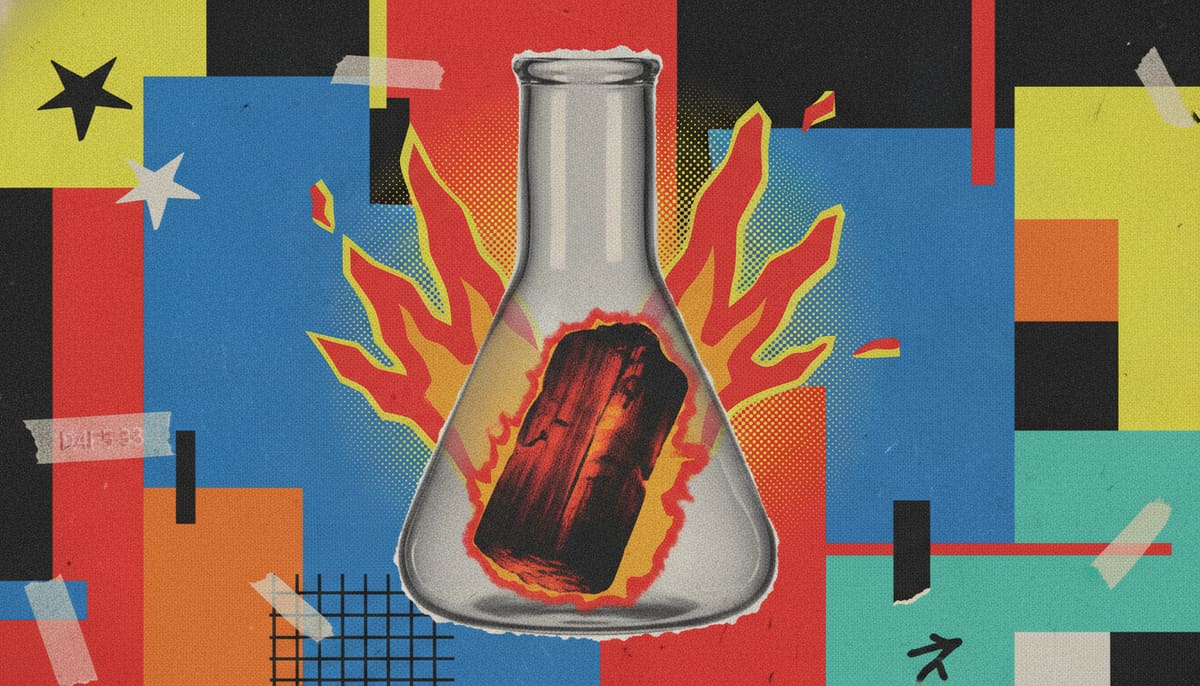
Whenever you light a campfire, you need three basic ingredients: heat, fuel, and oxygen. If you cut off the air, the flame suffocates and goes out instantly. But what happens if you blast organic matter with scorching heat while keeping all oxygen completely locked out? Instead of catching fire, the material undergoes a strange transformation called pyrolysis.
The word comes from ancient Greek roots, combining pyr (meaning fire) and lysis (meaning unbinding or separating). In simple terms, pyrolysis is a form of thermal decomposition—a chemical breakdown where intense heat shatters complex molecules into simpler pieces without letting them burn up. Because there is no oxygen around to feed a combustion reaction, the material cannot produce soot or ash like typical campfire smoke.
How Campfire Charcoal Is Made
You have probably used the results of this reaction during weekend barbecues without even realizing it. Charcoal briquettes are created using pyrolysis:
- Baking wood: Dense wood logs are sealed inside airtight chambers called kilns.
- Driving out impurities: Workers heat the kiln past 400 degrees Celsius (750 degrees Fahrenheit), which cooks out water, sap, and volatile gases.
- Leaving pure carbon: What remains behind is lightweight, porous carbon that burns much hotter, cleaner, and longer than regular wood.
Today, scientists are taking this ancient baking method into high-tech territory. Environmental engineers use pyrolysis to turn crop waste into biochar, a crumbly black substance that enriches garden soil and traps carbon underground for centuries. Other cutting-edge labs are using it to melt stubborn plastics back into reusable liquid oils. Have you ever experimented with making your own campfire charcoal?
Source: Science News Explores