Defying Gravity One Layer at a Time
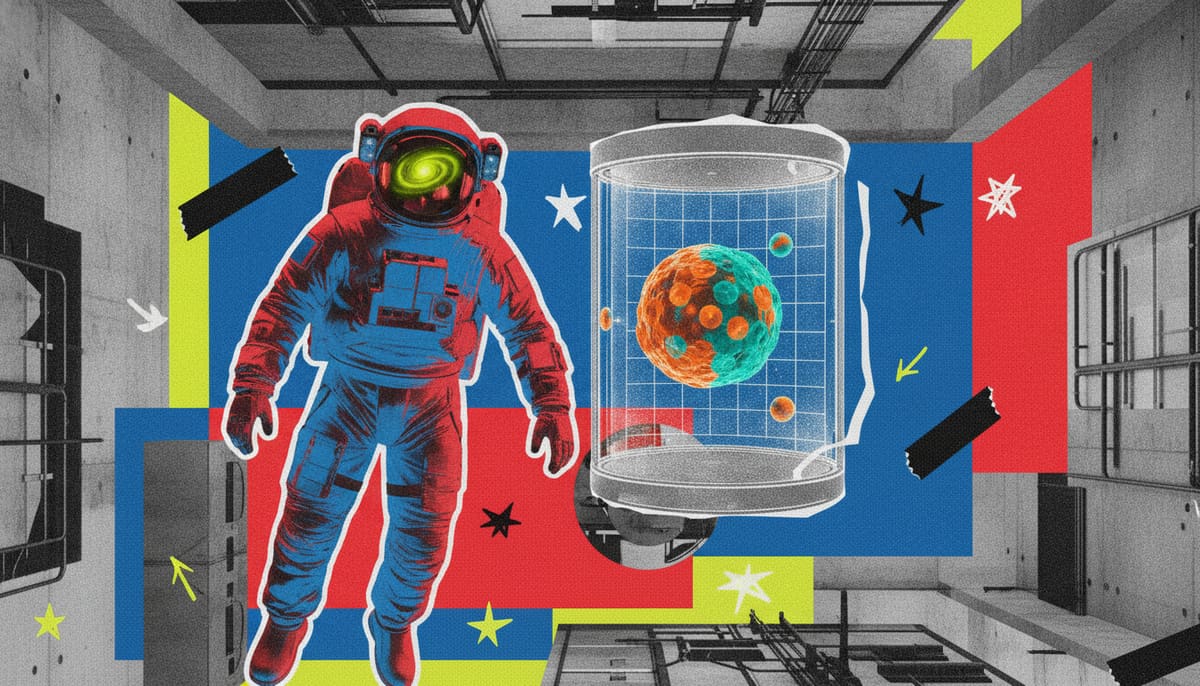
Printing something in 3D usually means stacking warm plastic into a toy or a gadget. But aboard the International Space Station (ISS), astronauts are taking the tech to a wild new level. They are successfully bioprinting living human cells and tissues in orbit!
Why travel over 250 miles above Earth just to print cells? On our home planet, gravity is a major roadblock for soft biological materials. When researchers try to construct delicate shapes like tiny blood vessels or soft heart tissues, gravity pulls down on them, causing the wet layers to slump into an unusable puddle. Back on Earth, scientists have to build rigid temporary supports, called scaffolds, to prop up the cells while they grow.
Floating into Shape
In the weightlessness of orbit—known as microgravity—everything changes:
- Cells float effortlessly in place without needing stiff artificial frames.
- Liquids and biological inks form perfect spheres and bridges on their own.
- Delicate human tissue layers can fuse together into natural, three-dimensional shapes.
Working inside a specialized sealed workstation called the Life Sciences Glovebox, astronauts feed nutrient-rich liquid to keep the living cells healthy while tiny mechanical nozzles place them with microscopic precision. The goal is not just cool orbital science; it could eventually help doctors manufacture replacement tissues or test lifesaving medicines without animal testing.
If you could design any zero-gravity science experiment on the space station, what would you create?
Source: Space.com