Beating Fall Damage
Leaping between high tree branches looks reckless, but squirrels routinely shrug off slips that would spell disaster for larger creatures. While human beings rightfully fear high falls, squirrels possess a natural set of biological shock absorbers that allow them to drop from staggering heights and simply scurry away.
The secret comes down to physics and a concept called terminal velocity. That is the maximum speed an object can reach while falling through the air, occurring when downward gravity is balanced by upward air resistance. Because squirrels weigh very little compared to their surface area, their top falling speed tops out at around 15 miles per hour. Humans, by comparison, reach a terrifying 120 miles per hour.
Acrobats of the Canopy
Terminal velocity is only half the battle. Squirrels are master aerialists who actively pilot their descent rather than tumbling helplessly.
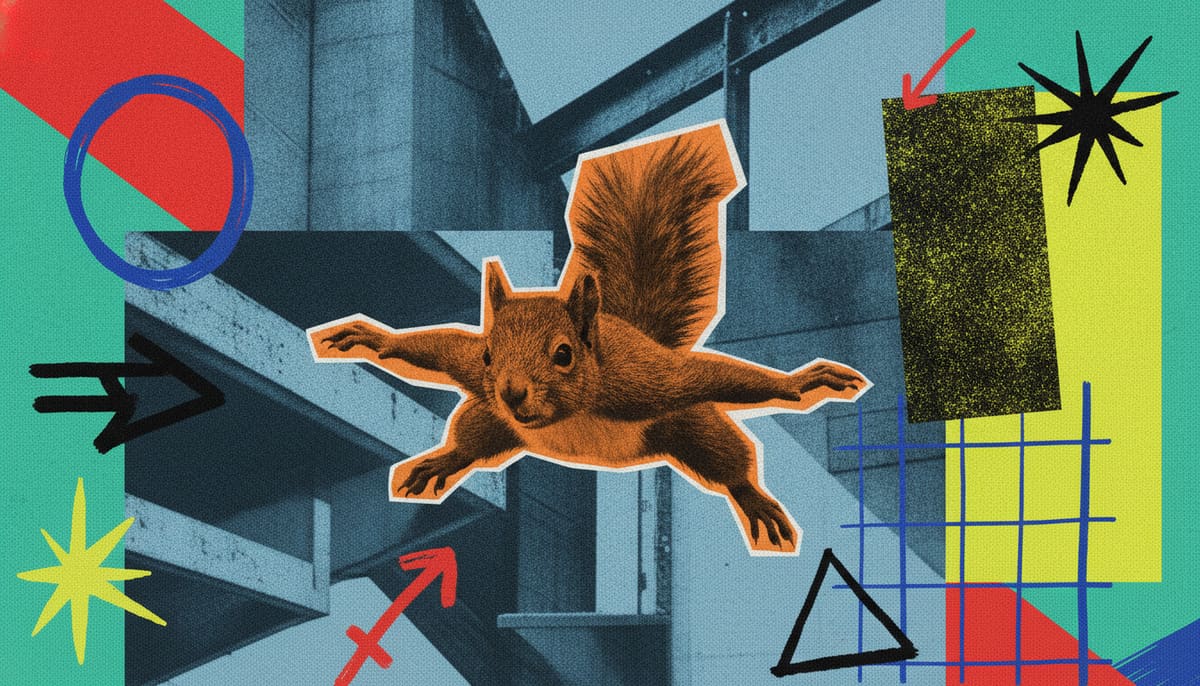
- The furry parachute: When falling, a squirrel flattens its body outward like a skydiver, maximizing drag to slow down.
- A bushy rudder: Their tails act as steering rudders, helping them rotate right-side up within fractions of a second.
- Spring-loaded landing gear: Flexible joints and deep muscle padding absorb the landing force, spreading the impact across their entire body.
While an unexpected plunge can still knock the wind out of them, these agile rodents are built to treat gravity as a minor inconvenience rather than a deadly threat.
If you could borrow any animal's unique physical superpower for a single day, which would you pick?
Source: Popular Science